Introduction
A tennis court is more than just a playing surface — it is an investment in performance, passion and community. Whether for a school, club, residential complex or professional facility, the right design and construction approach ensures consistent play, lower maintenance and a longer lifespan.
At Suneja Sports, we design and build tennis courts that combine global standards with local expertise, delivering spaces that perform for athletes of all levels.
A well-built tennis court doesn't just host matches — it builds healthier, stronger communities.
SUNEJA SPORTSChoosing the Right Surface
The playing surface defines the game experience, maintenance needs and overall cost. Here is a quick comparison of the most common options:
| SURFACE TYPE | PLAY CHARACTERISTICS | MAINTENANCE | IDEAL FOR |
|---|---|---|---|
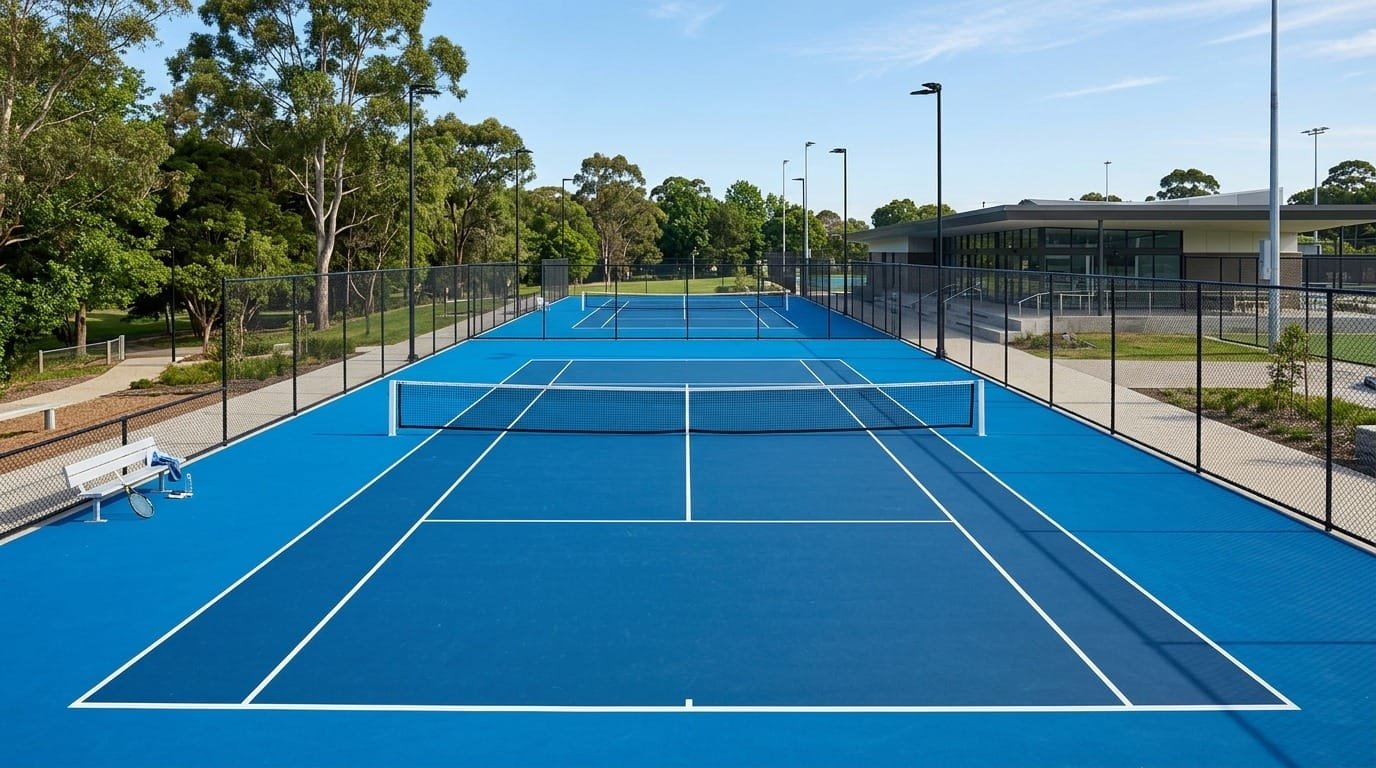
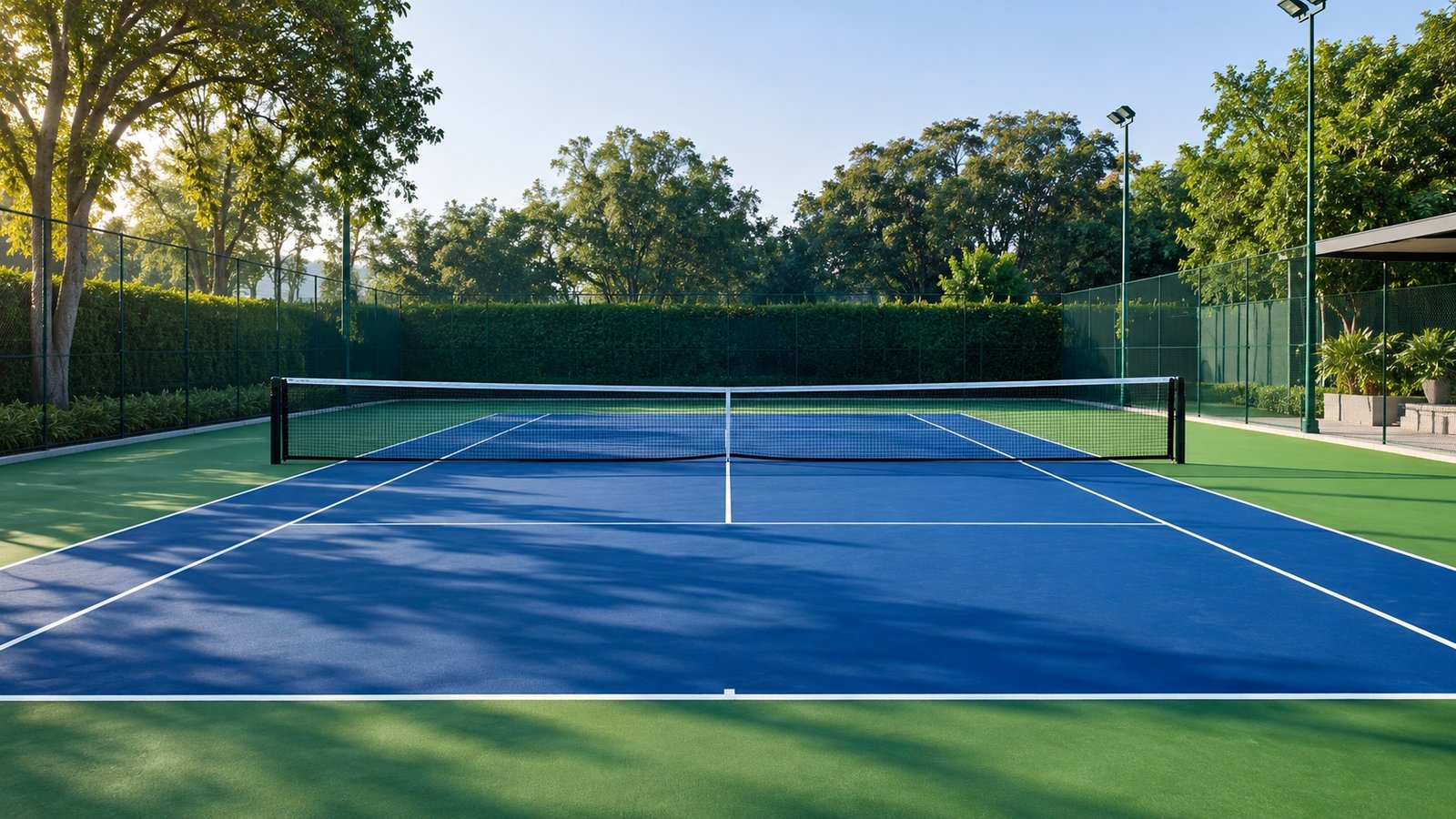
| Acrylic (Hard Court) | Consistent bounce, all-weather | Low | Schools, clubs, residential |
| Synthetic Grass | Softer feel, lower impact | Medium | Recreational, multi-sport use |
| Clay | Slower game, high grip | High | Clubs, professional training |
| Asphalt | Durable, cost-effective | Low | Budget-friendly projects |
Design & Construction Considerations
Building an ITF-standard tennis court requires millimeter-precision civil engineering. The performance of the top acrylic system depends directly on the stability of the subterranean sub-base.
- Sub-base Preparation: A reinforced 100mm–150mm PCC slab or asphalt binder course built on a fully compacted gravel subgrade prevents structural settling and hair-line surface cracking.
- Slope & Drainage: A uniform 0.83% to 1.0% single-plane gradient ensures rapid rainwater evacuation within 30 minutes of rainfall cessation.
- Cushion System Layers: Multi-layer resilient rubber micro-granule cushion coats absorb up to 22% of joint impact, reducing athletic fatigue.
- Illumination & Fencing: Anti-glare 500+ lux LED asymmetric mast lighting paired with PVC-coated galvanized chainlink perimeter fencing.
Maintenance & Longevity
A premium acrylic court engineered by Suneja Sports offers an operational lifespan of 15 to 20 years with straightforward periodic upkeep. Regular maintenance preserves surface friction coefficients and true ball bounce.
We recommend scheduled quarterly deep pressure washing (sub-1200 PSI), moss/algae mitigation, and professional resurfacing every 5 to 7 years to restore vibrant pigment UV protection and surface grip.
Cost Overview
Tennis court construction costs in India depend on site soil bearing capacity, chosen sub-base construction (asphalt vs reinforced concrete), cushion system thickness (3-coat standard vs 8-coat grand slam cushion), and auxiliary installations like floodlights and viewing galleries.
Investing in high-density aggregate sub-bases and certified acrylic polymer resins yields the lowest total cost of ownership (TCO) over a 10-year facility horizon.
Expert Insights
"The number one reason courts fail prematurely is inadequate moisture barrier sealing beneath the concrete slab. In tropical Indian climates with fluctuating water tables, vapor barrier membranes and micro-etched acrylic adhesion primers are non-negotiable."
— Senior Civil & Infrastructure Engineering Team, Suneja Sports
Key Takeaways
- Choose your surface based on player demographic, anticipated foot traffic, and maintenance capability.
- Prioritize engineered soil compaction and laser-leveled drainage over cosmetic finishes.
- Partner with certified turnkey facility builders with verified pan-India execution portfolios.